

Vax2Muc researchers bring mucosal vaccines to the spotlight at a Helicobacter workshop
On 1 – 4 July, the annual International Workshop on Pathogenesis and Host Response in Helicobacter Infections took place in Helsingør, Denmark. This year, the event brought together several Vax2Muc partners, who presented the findings from their ongoing research on next-generation mucosal vaccines. They covered their diverse work on finding ways to deliver the vaccine into the stomach and have it induce a local immune response, as well as preparing the various aspects of eventual vaccine candidate tests.
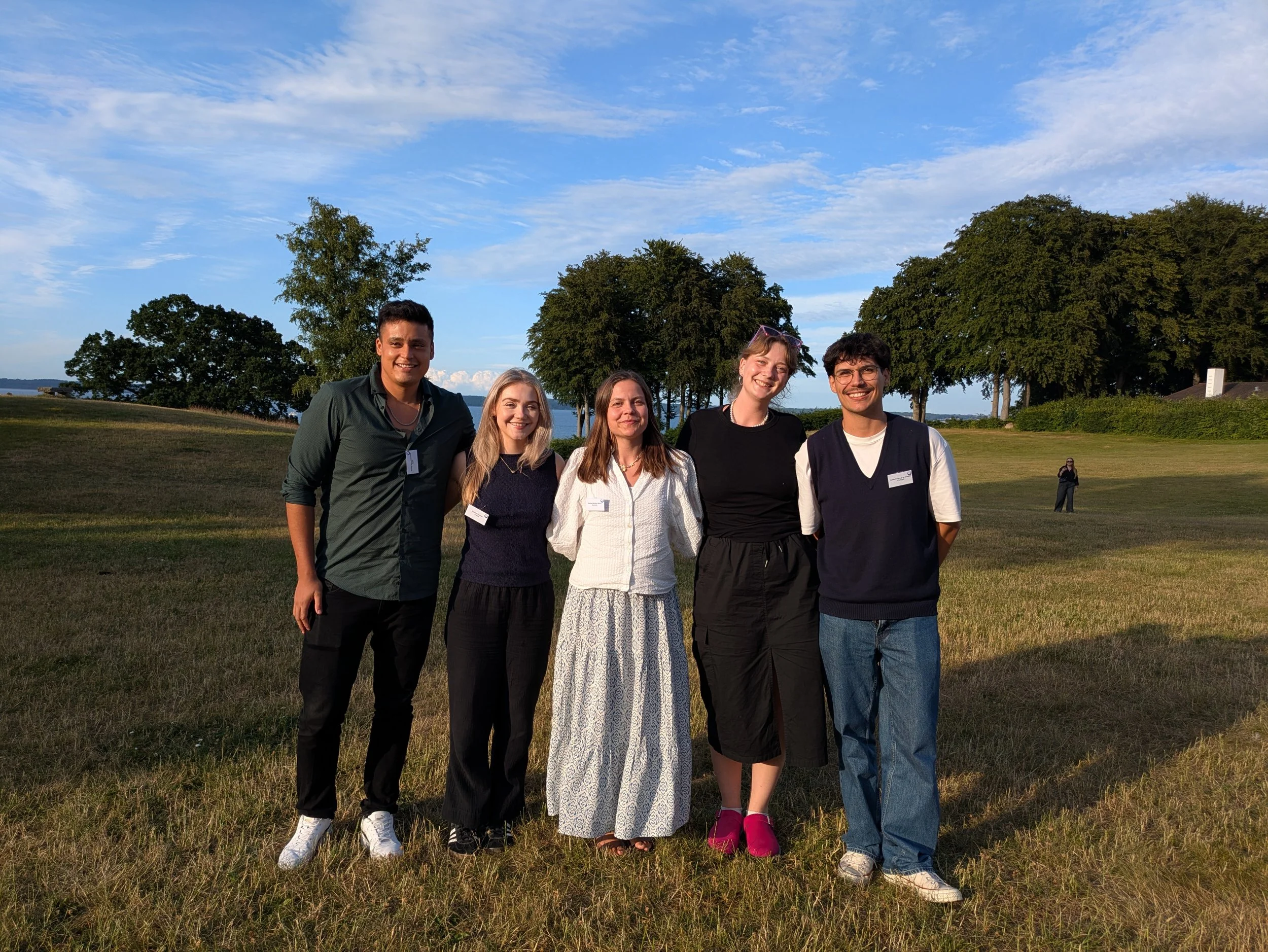
Some of the Vax2Muc researchers - Freddy Dehesa (IRTA-CRESA), Nicole O’Sullivan (Trinity College Dublin), Martina Bardino Mørch (Statens Serum Institut), Cora Mibus (Technical University of Munich), Tomás Concha (Faculty of Pharmacy, University of Lisbon) - at the workshop.
Vax2Muc researchers take the stage
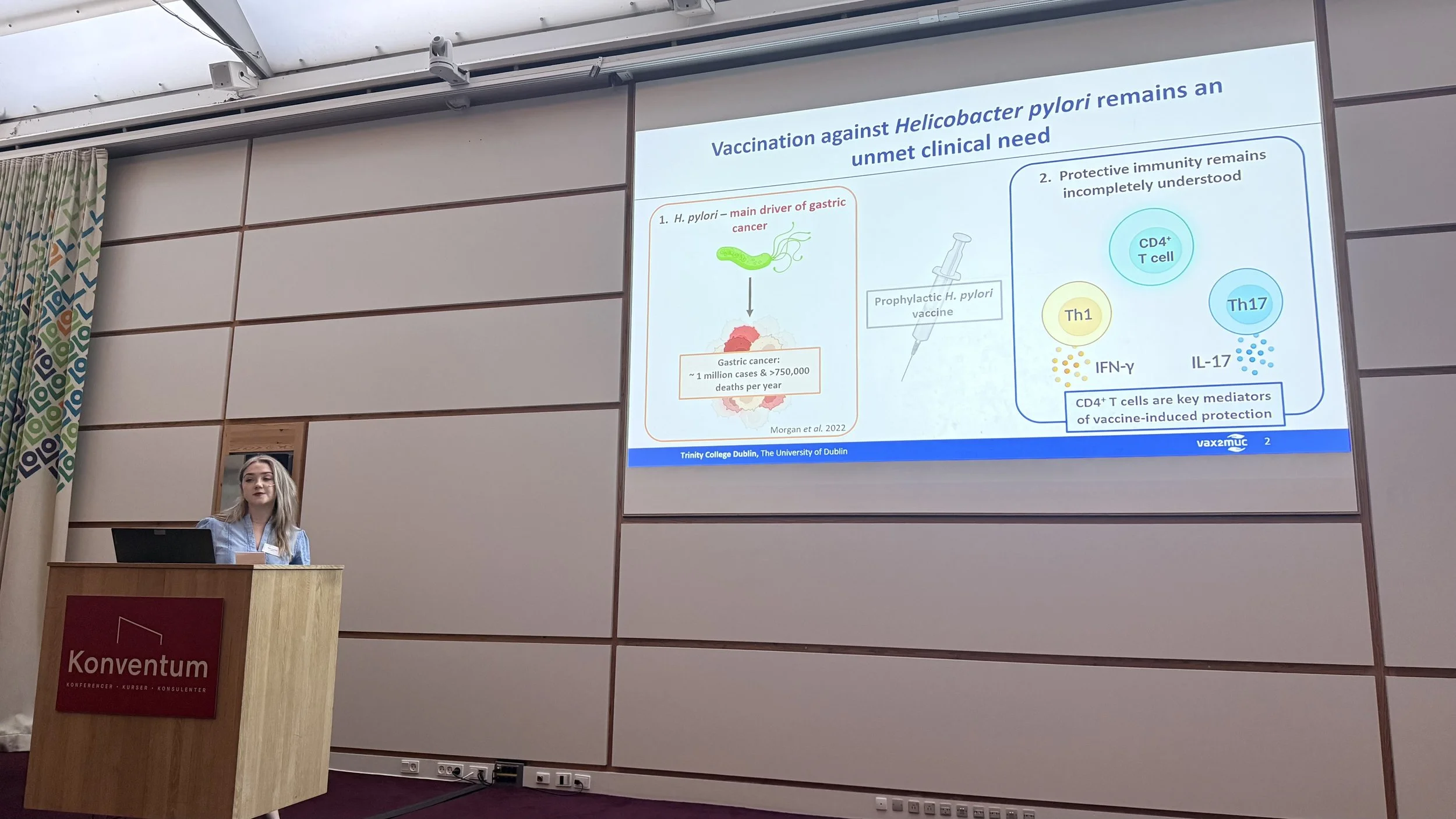
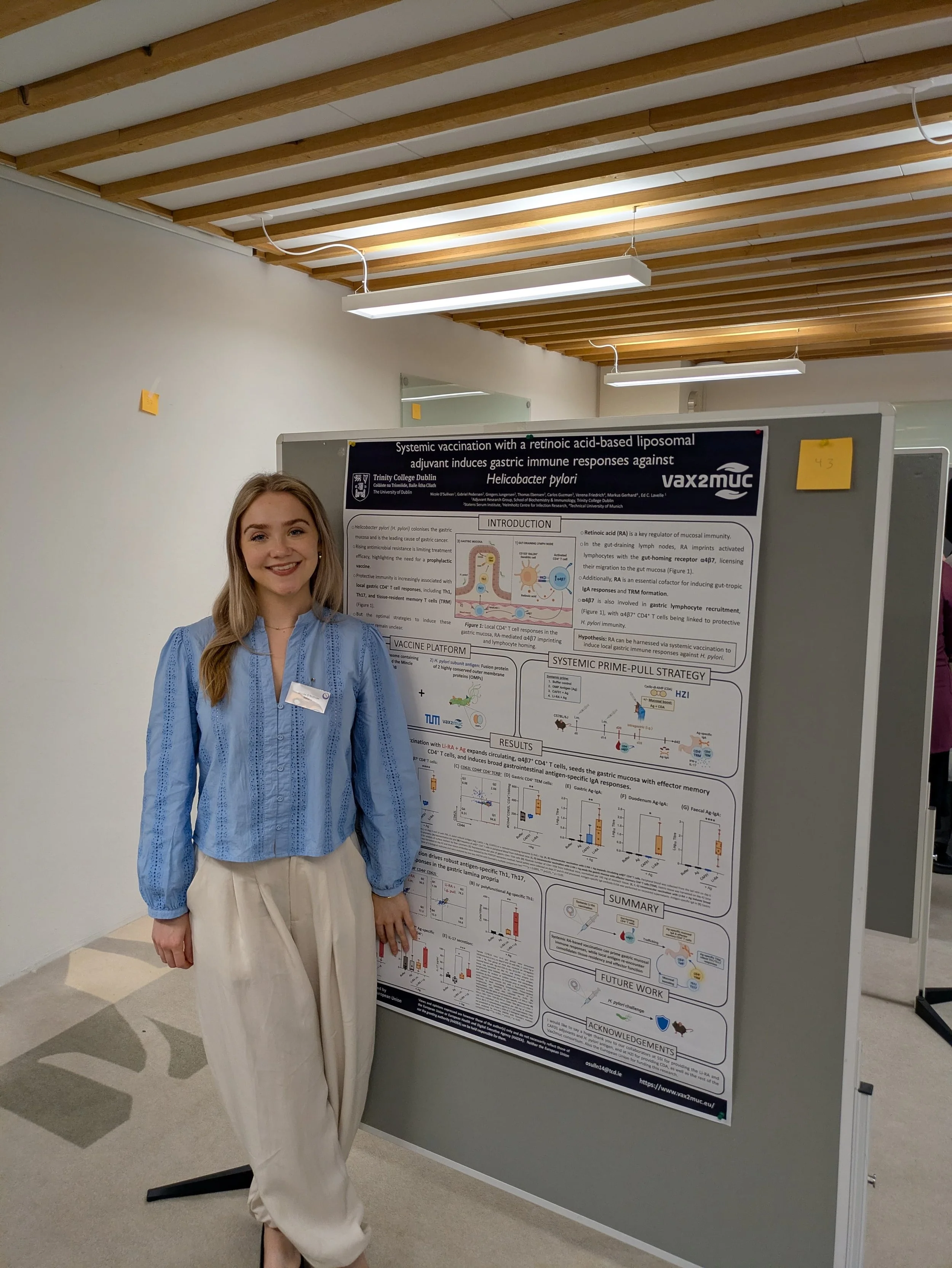
The first session of interest for the consortium was the one focusing on Helicobacter Pylori and T-cells. Nicole O’Sullivan (Trinity College Dublin) presented her work highlighting recent findings on ways to induce a local immune response in the harsh environment of the stomach.
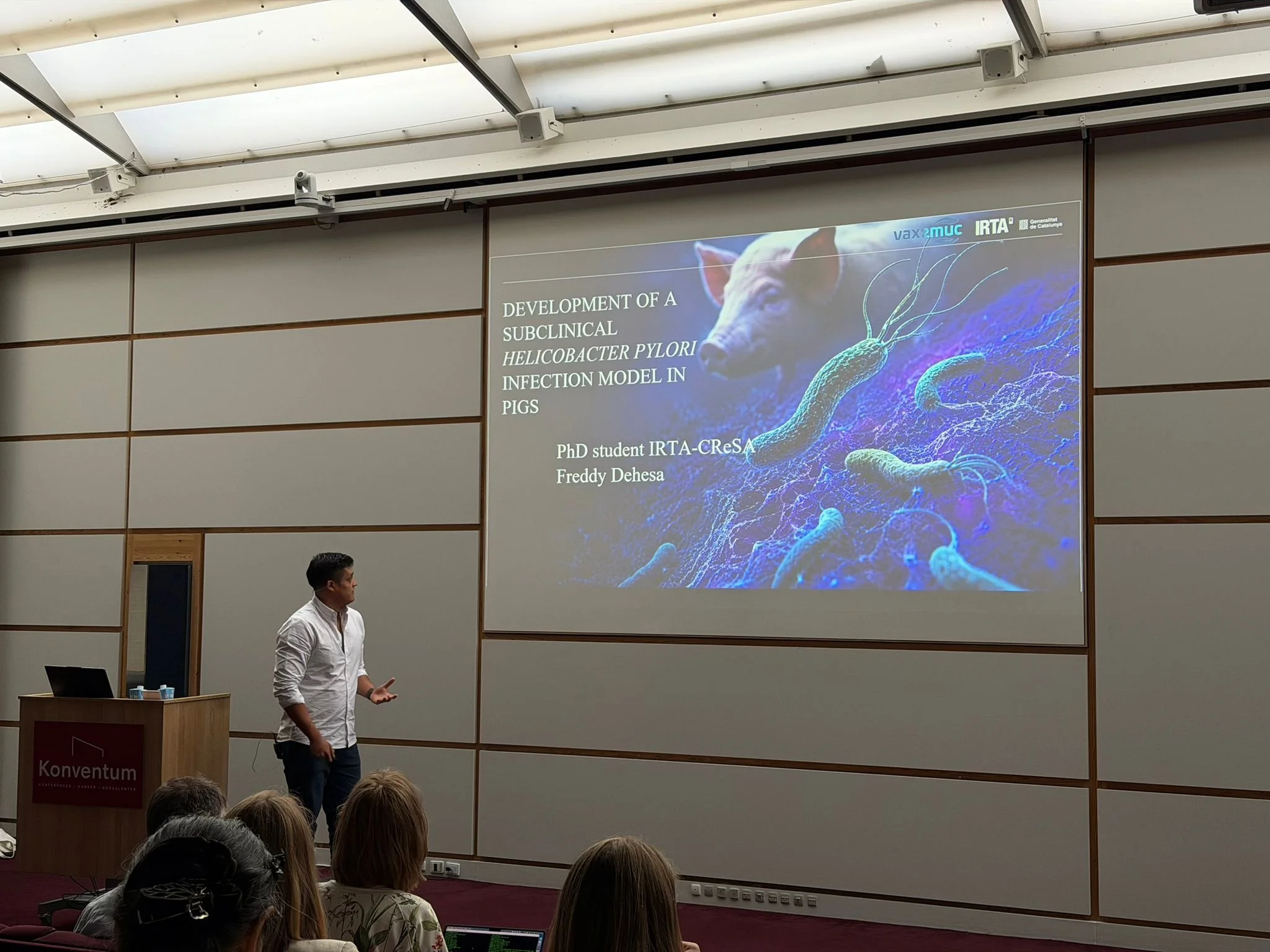
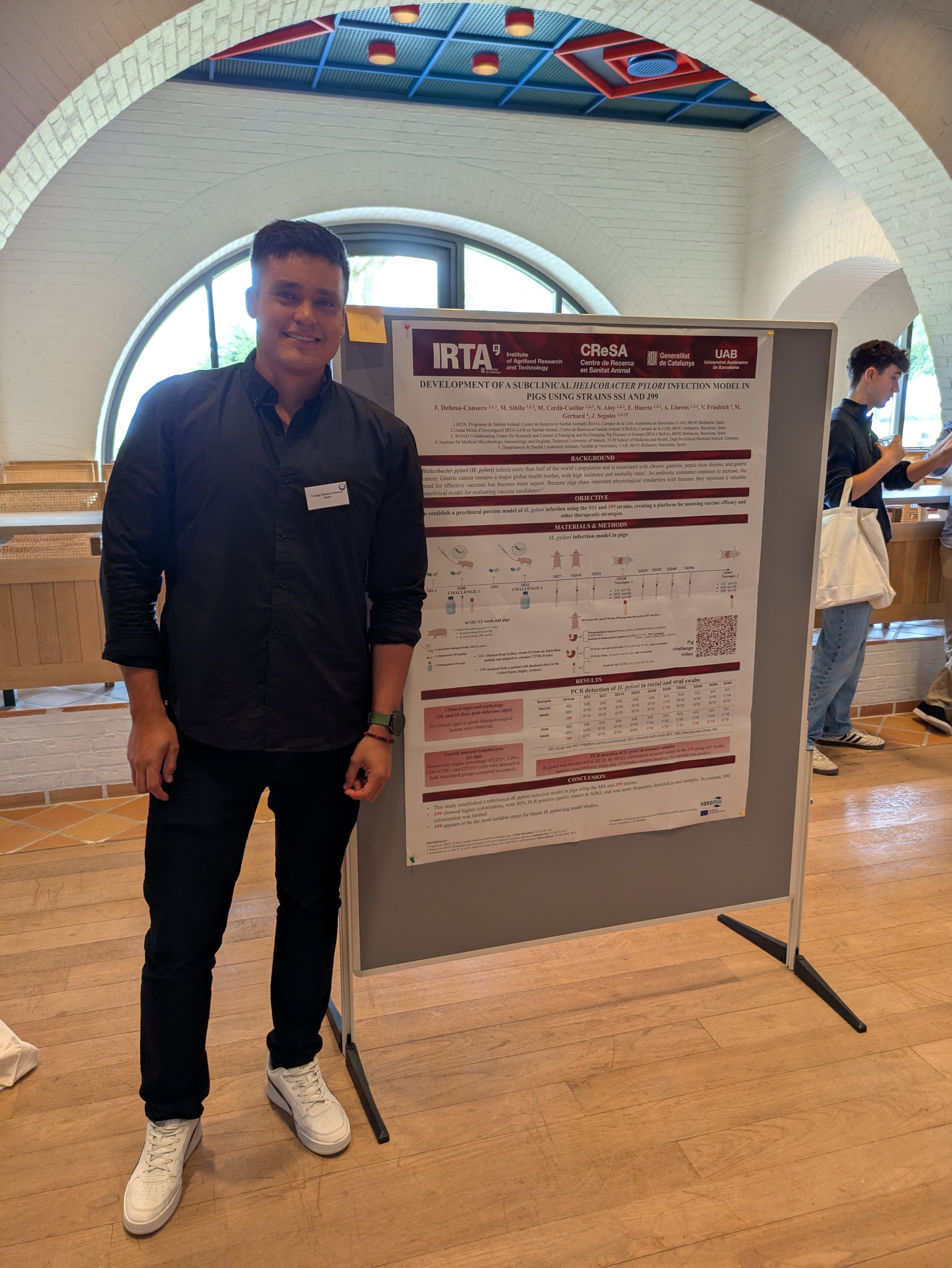
Focusing attention on the topic of animal models and the other Helicobacters at a session the next day, two more project partners presented Vax2Muc’s work. Freddy Dehesa (IRTA-CRESA) presented two works (one of them as an oral communication), each offering an insight into an aspect of his ongoing work aiming to advance the study of Helicobacter infections using pig models.
Find further information in the posters shown during the event:
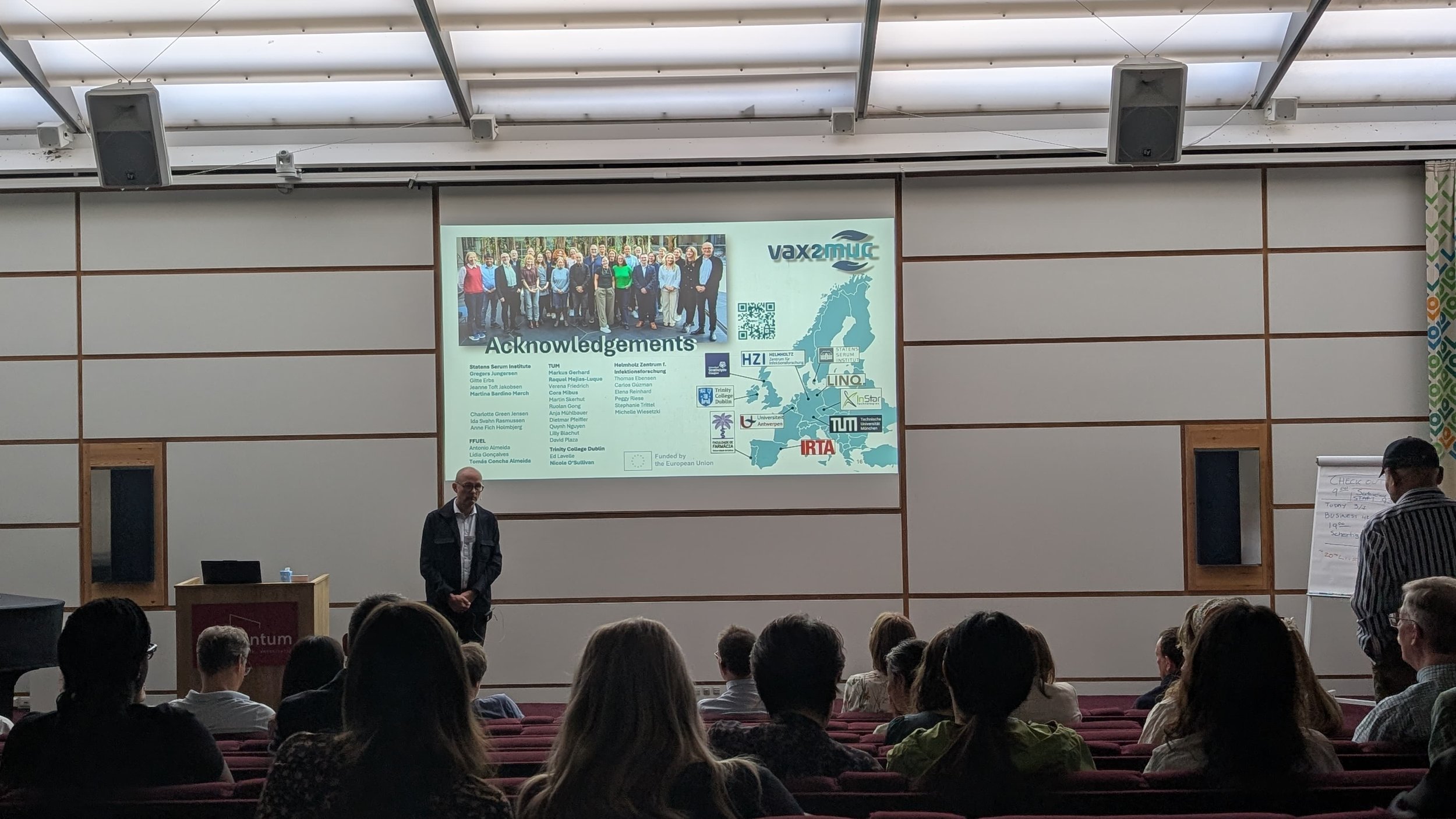
During the same session, Gregers Jungersen (Statens Serum Institut) presented the Vax2Muc project with the talk “Next generation vaccines against gastrointestinal mucosal pathogens, using Helicobacter pylori as model pathogen”, highlighting the researchers’ progress so far and the next steps in identifying a vaccine candidate.
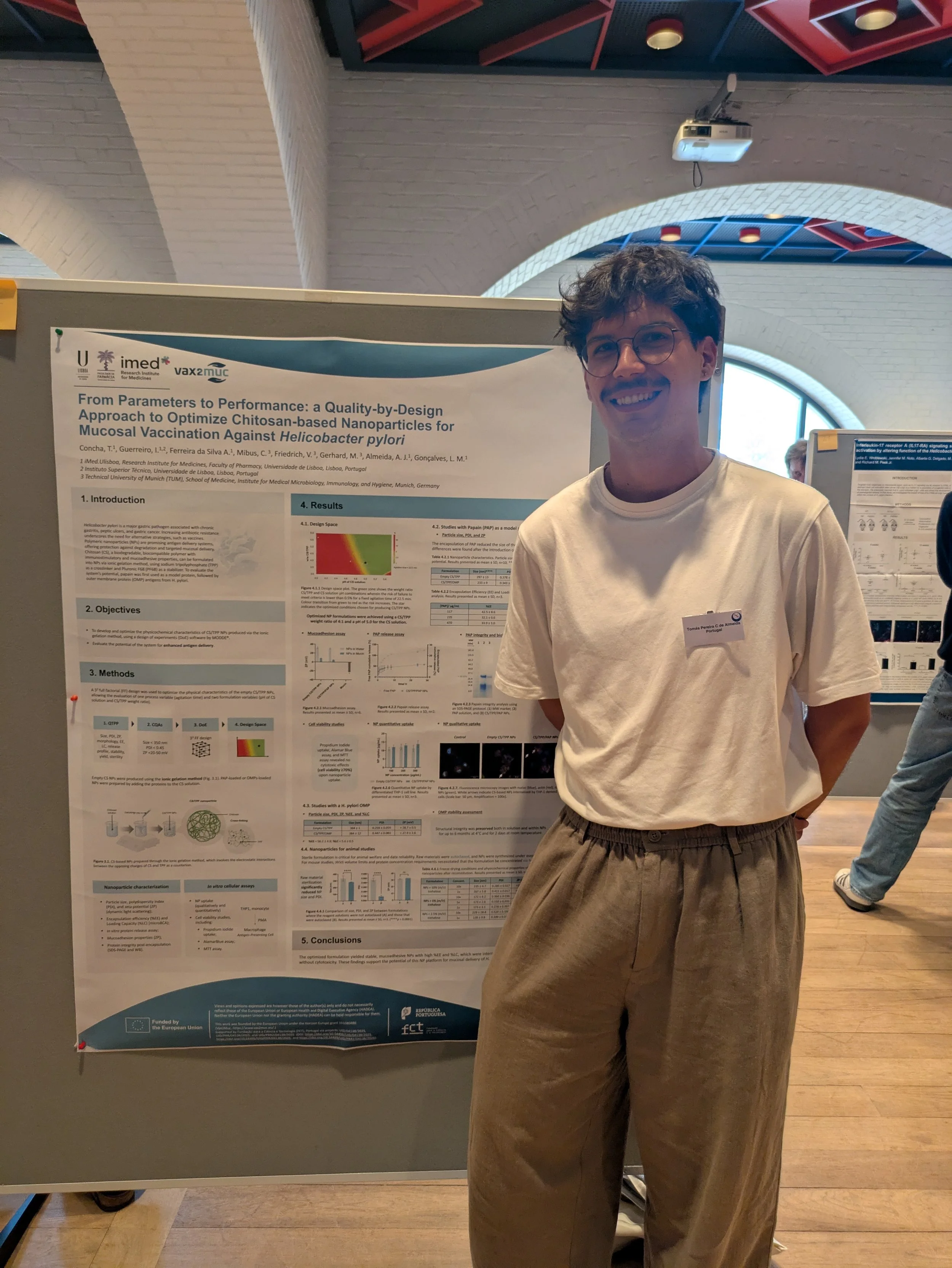
At the poster sessions, conference visitors were also able to explore the project team’s work in Portugal. Tomás Concha (Faculty of Pharmacy, University of Lisbon) presented a poster summarising his findings from the development and optimisation of a nanoparticle delivery platform intended for mucosal vaccination against H. pylori.
Find further information in the poster:
Vax2Muc session on vaccines and anti-infectives
In addition to the individual presentations and posters, the partners organised a vaccines-related session titled "Vaccines and anti-infectives". Chaired by Markus Gerhard (Technical University of Munich), the Vax2Muc coordinator, the session featured short talks about the recent advancements in H. pylori vaccines and anti-infectives research by Dietmar Pfeiffer (Technical University of Munich, Munich, Germany), Florent Ailloud (Max von Pettenkofer Institute, Munich, Germany), Mariana I. Capurro (The Hospital for Sick Children, Toronto, Canada), Iryna Tkachenko (Umeå University, Umeå, Sweden), David Plaza (Technical University of Munich, Munich, Germany) and Ana Butsyk (Umeå University, Umeå, Sweden).
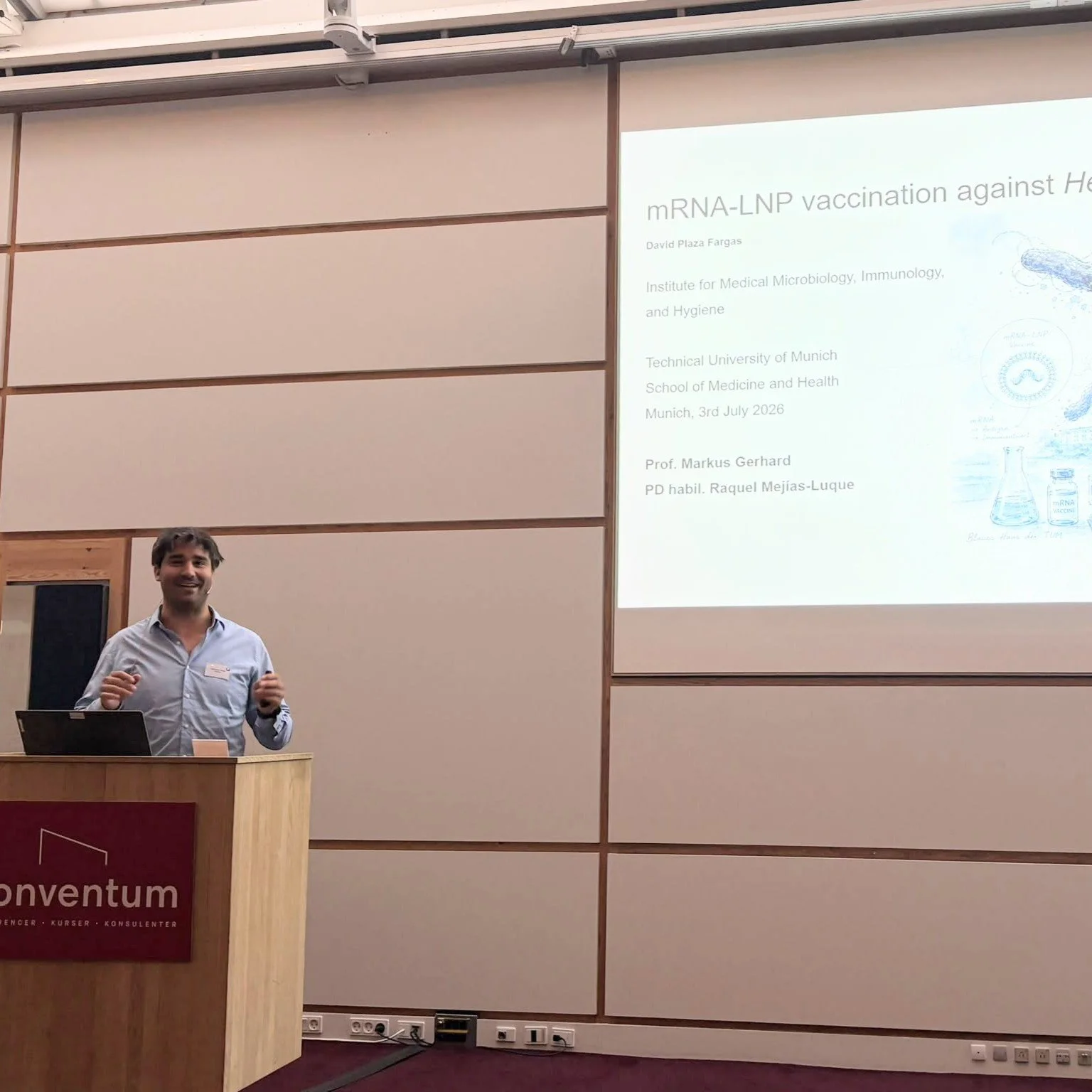
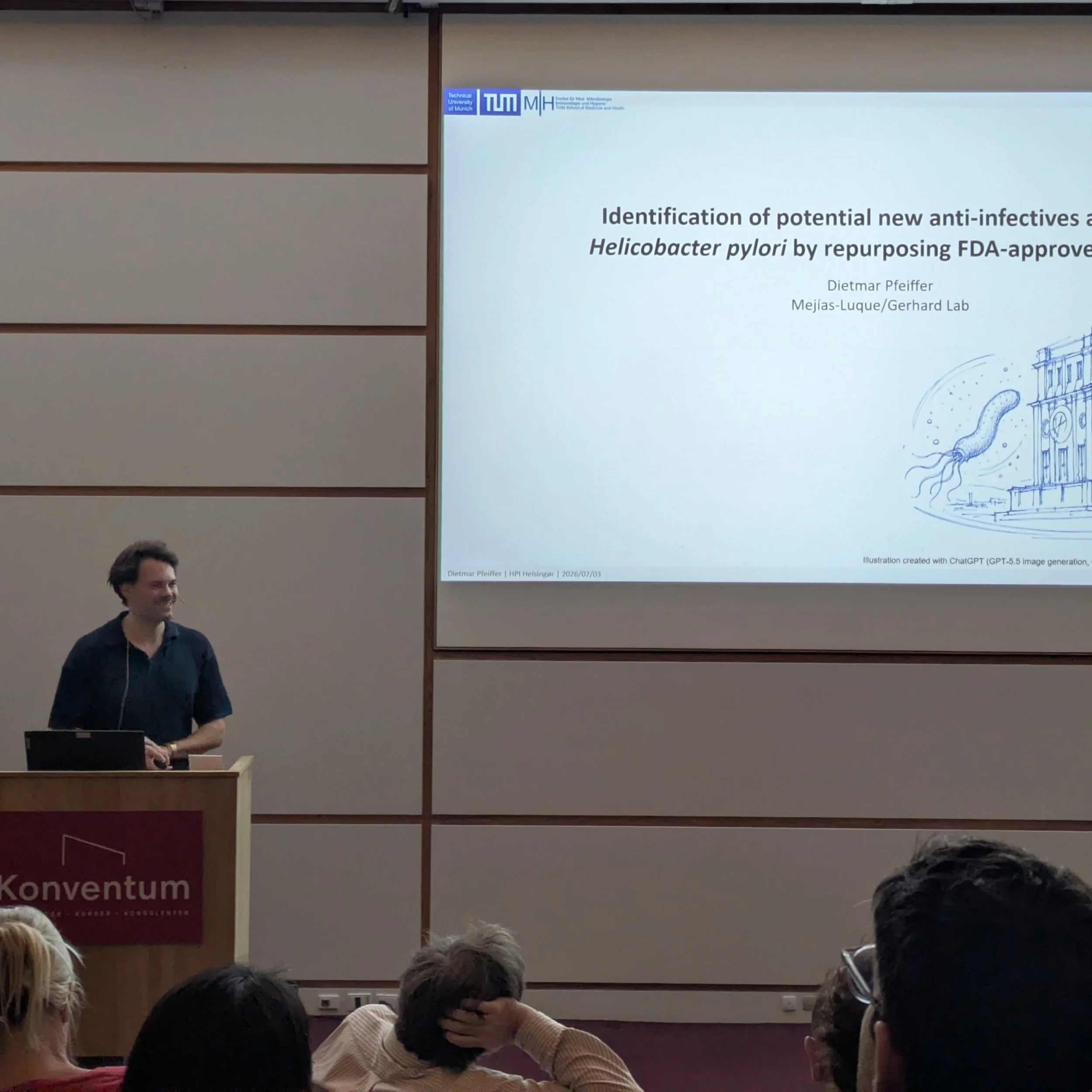
Presenters discussed H. pylori vaccine candidates, innovative approaches to identifying new treatment strategies, machine-learning models for predicting antibiotic resistance, and more. The session highlighted various lines of research underway to limit the widespread H. pylori infections and the bacteria’s growing resistance to antibiotics.
Vax2Muc’s contribution to the four-day event was broad and reflected the project's role in the wider field of mucosal vaccine research. As the partners narrow in on potential H. pylori vaccine candidates, they remain committed to tackling the world’s leading cause of gastric cancer and look forward to sharing further insights in the coming years.
Explore our news page to discover more about the research so far and any new updates.